
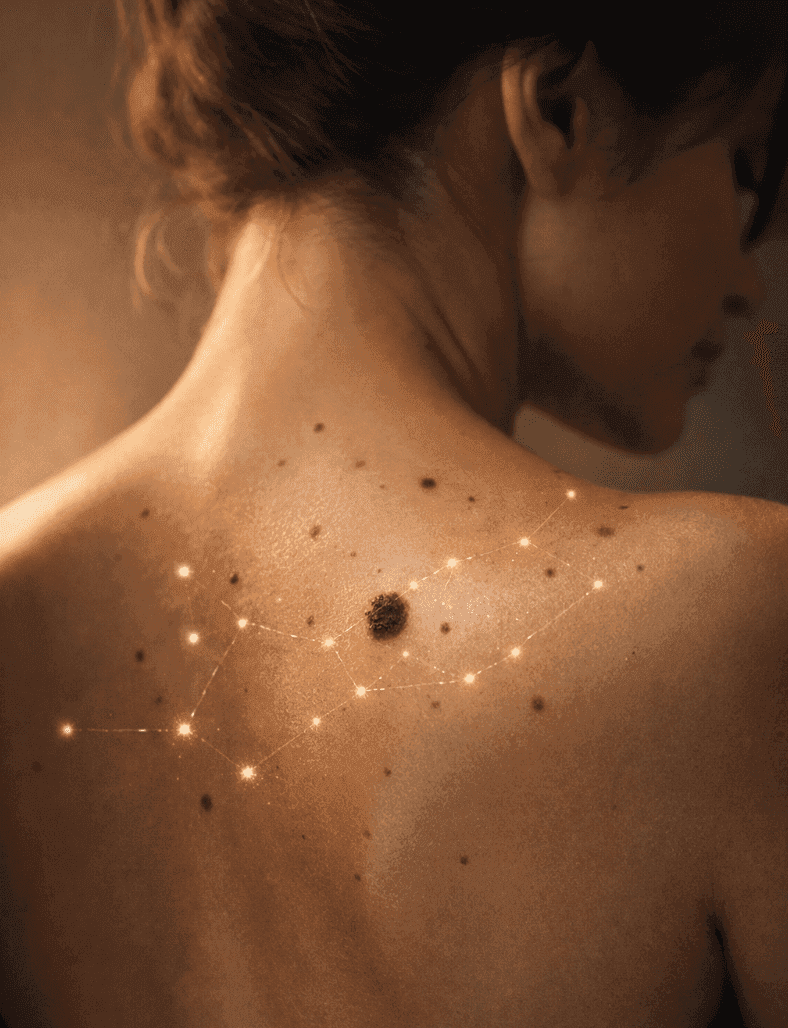
When we talk about skin cancer, we’re not talking about a single disease. In practice, the most useful division for understanding it is this: non-melanoma skin cancer and melanoma . The two main groups behave differently, have different levels of aggressiveness, and also differ significantly in their prognosis and treatment.
Before you read: At Skinpaths, we distinguish between opinion and evidence. To write this content, we prioritized indexed medical sources and recommendations from scientific societies. You’ll find the complete bibliography at the end for your reference.
Important: This article is for informational purposes only and does not replace medical advice. If you have any questions, persistent symptoms, or your condition worsens, consult a healthcare professional.
How is skin cancer classified?
Simply put, skin cancer is divided into:
-
Non- melanoma , also called in many texts non-melanoma skin carcinoma or keratinocytic carcinoma . This category mainly includes basal cell carcinoma and cutaneous squamous cell carcinoma .
-
Melanoma , which originates from melanocytes, the cells that produce skin pigment. NCI, 2025 ; ACS, 2023
Although other rare skin tumors exist, these are by far the most important to the general public. NCI, 2025
1) Non-melanoma skin cancer
The “non-melanoma” group is the most common. In the United States, it is estimated that millions of basal cell and squamous cell carcinomas are diagnosed each year , and about 8 out of 10 are basal cell carcinomas. Even so, exact figures are difficult to determine because these tumors are not always systematically recorded in national cancer registries. ACS, 2023 ; NCI, 2025
Basal cell carcinoma
It is the most common type of skin cancer. It usually grows slowly , appears mainly in areas exposed to the sun—especially the face and nose—and almost never metastasizes . Its main problem is not usually spreading, but rather destroying local tissue if left untreated. Therefore, although it is often not the most dangerous in terms of survival, it can cause more extensive surgeries, scarring, or disfigurement if diagnosed late. NCI, 2025
From an epidemiological perspective, basal cell carcinoma is especially common in people with fair skin and in older adults, partly due to cumulative sun exposure over a lifetime. Furthermore, modern epidemiology suggests that basal cell carcinoma is strongly associated with intense UV exposure, even from early stages of life. (Leiter and Keim, 2020 ; NCI, 2025)
Regarding treatment, the mainstay is usually surgery , including Mohs surgery in some cases. Depending on the type and location, radiotherapy, curettage and electrodesiccation, cryosurgery, photodynamic therapy, or topical treatments such as imiquimod and 5-FU may also be used. In advanced or inoperable cases, targeted therapies such as vismodegib or sonidegib are available. NCI, 2025
Cutaneous squamous cell carcinoma
Cutaneous squamous cell carcinoma (cSCC) is less common than basal cell carcinoma, but is generally more aggressive . It is also often associated with UV radiation, but chronic and cumulative sun exposure over decades plays a significant role. It is the type of non-melanoma skin cancer that causes the most concern due to its ability to invade more deeply and, in a minority of cases, metastasize. Leiter and Keim, 2020 ; NCI, 2025
Most localized squamous cell carcinomas have a good cure, but not all behave the same way. In recent literature, the overall metastasis rate is generally between 1.2% and 5% , with a higher risk in high-risk tumors and in immunocompromised patients. (Caudill et al., 2023 ; Khaddour et al., 2024)
This point is very important because there are particularly vulnerable groups: people with solid organ transplants (kidney, liver, etc.), patients with sustained immunosuppression, and workers with chronic occupational sun exposure. In these contexts, squamous cell carcinoma can be more frequent and more aggressive. NCI, 2025 ; Khaddour et al., 2024 ; Slavinsky et al., 2024
Treatment is also usually primarily surgical. Depending on the case, conventional surgery, Mohs surgery, or radiation therapy may be used. In advanced or inoperable disease, immunotherapy, such as cemiplimab or pembrolizumab , is also an option. NCI, 2025
2) Melanoma
Melanoma is much less common than non-melanoma skin cancer, but it is the most concerning because it has a greater capacity to invade deep tissues and spread to lymph nodes and other organs. In fact, although it represents a small proportion of all skin cancers, it causes the vast majority of deaths from this cause. NCI, 2025 ; NCI, 2025 ; ACS, 2026
Epidemiologically, melanoma is more common in people with fair skin and is more frequent in non-Hispanic whites; furthermore, the risk increases with age, and the average age at diagnosis is around 66 years . However, there is an important difference with non-melanoma skin cancer: melanoma is not uncommon in young adults and is even one of the most common cancers in people under 30, especially young women. (SEER, 2026 ; ACS, 2026)
Although the overall risk of melanoma is lower in darker skin tones, it can still occur , and in these patients it tends to be diagnosed at more advanced stages with poorer survival rates. Furthermore, acral melanoma—that is, melanoma on the palms, soles, or under the nails—is proportionally more common in people of color. (Brunsgaard et al., 2023a ; Brunsgaard et al., 2023b ; ACS, 2023)
There are several clinical subtypes of melanoma. The most well-known are superficial spreading melanoma , nodular melanoma, lentigo maligna melanoma , and acral lentiginous melanoma. For the general public, the most important thing is not to memorize the names, but to know that some grow more horizontally at first, while others—like nodular melanoma—tend to grow deeper earlier and may be detected at more advanced stages. ACS, 2023
In melanoma, treatment depends largely on the stage. Surgery remains the cornerstone when the tumor is localized, but in more advanced disease, immunotherapy, targeted therapies, radiation therapy, and other systemic treatments are used. The good news is that these advances have greatly improved survival rates in recent years. NCI, 2025 ; NCI, 2024 ; ACS, 2026
Which groups are most at risk?
Generally speaking, the risk increases in people with fair skin, a history of intense UV radiation exposure, tanning beds, sunburns, many moles, or a personal/family history of the condition. But there are specific groups that deserve special attention:
- Older adults , especially for basal cell and squamous cell carcinoma.
- Young adults and young women , where melanoma remains relevant.
- Outdoor workers , such as those in agriculture, construction, mail, and military personnel, due to cumulative sun exposure.
- Immunosuppressed patients , especially transplant recipients, are at increased risk of aggressive squamous cell carcinoma. ACS, 2026 ; Slavinsky et al., 2024 ; Khaddour et al., 2024 ; Sena et al., 2016
What about life expectancy?
The most honest thing to say here is that there is no single life expectancy for «skin cancer» . It all depends on the type of tumor and, above all, the stage at which it is diagnosed.
In melanoma , the 5-year relative survival rate in the US is over 99% if localized, about 76% if it has spread to lymph nodes or regional structures, and approximately 35% if distant metastasis is present. ACS, 2026 ; SEER, 2026
In basal cell carcinoma and most localized squamous cell carcinomas , the prognosis is usually very good, and most cases are cured with local treatment. Furthermore, although non-melanoma skin cancer is extremely common, it accounts for less than 0.1% of cancer deaths. (NCI, 2025)
The key idea
If it had to be summarized in one sentence, it would be this: non-melanoma skin cancer is the most common; melanoma is the most aggressive of the common types . That’s why it’s not enough to think «if it doesn’t hurt, it doesn’t matter» or «it will always be something benign.» Early detection greatly improves treatment, prognosis, and, in the case of melanoma, even survival. NCI, 2025 ; SEER, 2026
Bibliography and sources
- American Cancer Society. Basal and Squamous Cell Skin Cancer: Key Statistics . Accessed March 17, 2026.
- American Cancer Society. Melanoma Skin Cancer: Key Statistics . Updated 2026. Accessed March 17, 2026.
- American Cancer Society. Survival Rates for Melanoma Skin Cancer by Stage . Updated January 13, 2026. Accessed March 17, 2026.
- American Cancer Society. What Is Melanoma Skin Cancer? Updated 2023. Accessed March 17, 2026.
- Brunsgaard EK, Grossman D. Melanoma in skin of color: Part I. Epidemiology and clinical presentation. J Am Acad Dermatol. 2023;89(3):445-456. doi:10.1016/j.jaad.2022.04.056.
- Brunsgaard EK, Grossman D. Melanoma in skin of color: Part II. Racial disparities, role of UV, and interventions for earlier detection. J Am Acad Dermatol. 2023;89(3):457-468. doi:10.1016/j.jaad.2022.04.057.
- Caudill J, Burton KA, Brough KR, et al. The risk of metastases from squamous cell carcinoma of the skin. J Surg Oncol. 2023;127(1):30-35. doi:10.1002/jso.27188.
- Khaddour K, Shah J, Tio D, et al. Current Advances and Challenges in the Management of Cutaneous Squamous Cell Carcinoma in Immunosuppressed Patients . Cancers (Basel). 2024;16(19):3328. doi:10.3390/cancers16193328.
- Leiter U, Keim U, Garbe C. Epidemiology of Skin Cancer: Update 2019. Adv Exp Med Biol. 2020;1268:123-139. doi:10.1007/978-3-030-46227-7_6.
- National Cancer Institute. Skin Cancer (Including Melanoma)—Patient Version. Updated 2025. Accessed March 17, 2026.
- National Cancer Institute. S kin Cancer Prevention (PDQ®)–Health Professional Version. Updated 2025. Accessed March 17, 2026.
- National Cancer Institute. Skin Cancer Treatment (PDQ®)–Health Professional Version . Updated 2025. Accessed March 17, 2026.
- National Cancer Institute. Skin Cancer Treatment (PDQ®)–Patient Version . Updated 2025. Accessed March 17, 2026.
- National Cancer Institute. Melanoma Treatment (PDQ®)–Patient Version. Updated 2025. Accessed March 17, 2026.
- Sena JS, Girão RJ, Carvalho SMF, et al. Occupational skin cancer: Systematic review. Rev Assoc Med Bras (1992). 2016;62(3):280-286. doi:10.1590/1806-9282.62.03.280.
- SEER Program, National Cancer Institute. Cancer Stat Facts: Melanoma of the Skin . Accessed March 17, 2026.
- Slavinsky V, Helmy J, Vroman J, Valdebran M. Solar ultraviolet radiation exposure in workers with outdoor occupations: a systematic review and call to action. Int J Dermatol. 2024;63(3):288-297. doi:10.1111/ijd.16877.
Categories: Skin cancer · Skin spots

Content reviewed by
Dr. Rodolfo Suárez
Médico Patólogo y Dermatólogo Master en Patología Cutánea Avanzada
- Published
- September 18, 2026
- Updated
- September 23, 2026
Medically reviewed by specialists
Our content is based on current scientific evidence and clinical protocols.