

Dermatologists who treat cosmetic dermatology and skin aging
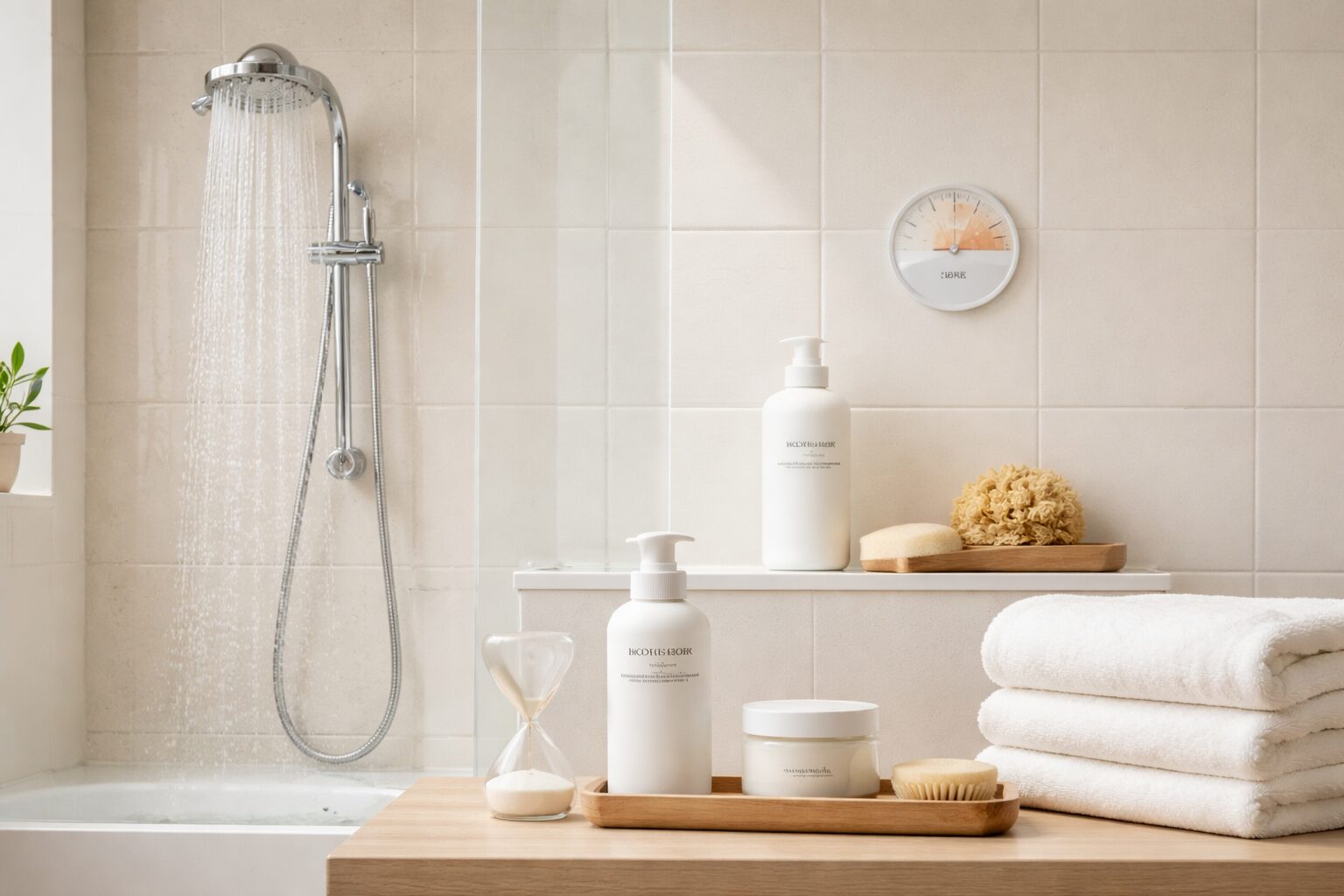
Your shower can be a silent ally for your skin, or, without you even realizing it, a factor that dries it out and irritates it. In this article, you'll learn which habits truly matter—water temperature, duration, type of cleanser, how you dry off, and when to moisturize—to care for your skin barrier and reduce tightness, itching, and sensitivity, with simple steps you can start applying today.
Before reading: En skinpaths We distinguish between opinion and evidence. To write this content, we prioritized indexed medical sources and recommendations from scientific societies. At the end, you will find the complete bibliography for your reference.
Important: This article is for informational purposes only and does not replace medical advice. If you have any questions, persistent symptoms, or your condition worsens, consult a healthcare professional.
Summary in 60 seconds
- The skin doesn't need to be "degreased" daily: it needs sufficient cleaning and guarantee a barrier intact
- Prioriza warm water, short showers (5–10 min) y less friction.
- Usa gentle cleanser only where needed (armpits, groin, feet) and avoid fragrances if your skin is reactive.
- Seca with taps and apply moisturizer immediately (ideally in the first few minutes).
- If you have very dry skin, frequent itching, eczema, or breakouts, these habits often make more of a difference than "trendy products."
What is the skin barrier and why does it matter?
Showering is a daily habit for many people, but it's also a time when skin can become uncomfortable: tight, flaky, itchy, or red. This happens because hot water, prolonged shower time, and some cleansers can disrupt the outermost layer of skin (the skin barrier), which acts as a "wall" to retain water and defend against irritants.
A skin-friendly shower aims for balance: removing sweat, dirt, and sebum without leaving skin feeling dry and flaky. Dermatology recommendations for dry skin agree on the essentials: less time, lukewarm water, gentle cleansing, and immediate moisturizing . (American Academy of Dermatology 2026)
How Does It Work?
Think of the skin barrier as a brick wall: the cells are the bricks and the lipids (fats) are the mortar. Excess heat, friction, and certain surfactants (cleansing agents) can weaken that mortar, increasing water loss (dryness) and sensitivity.
Two key ideas:
Water temperature and exposure: Heat and repeated exposure can worsen markers of irritation and barrier function compared to warm water. Herrero-Fernandez 2022
pH and cleansers: Skin functions best at a slightly acidic pH. More alkaline soaps can raise the surface pH and are associated with poorer tolerance in sensitive skin. Lambers 2006
How to take the ideal shower?
1) Temperature and duration
- Warm water (avoid “very hot”).
- 5 to 10 minutes This is usually a reasonable range for daily hygiene; longer periods increase the risk of dryness. American Academy of Dermatology 2026
2) Where to clean (and where there's no need to insist)
- Use cleaner especially on: armpits, groin, feet and areas with sweat/odor.
- On arms, legs and torso, many people tolerate a "lighter" cleansing (without scrubbing) well, especially if they have dry or reactive skin.
3) Which cleaner to choose
- If your skin gets dry or itchy: choose fragrance free, without colorants, soft.
- If you have a history of dermatitis from perfumed products, minimizing fragrances may reduce the risk of flare-ups. Reeder 2020
4) How to dry: minimal friction
- Instead of rubbing, dry with taps with a clean towel.
- Avoid harsh scrubbers or daily exfoliating gloves: frequent exfoliation adds friction and, on sensitive skin, can worsen irritation.
5) The step that makes the most difference: hydrating “within the ideal time window”
- Apply your moisturizer when the skin is still slightly damp, right after patting dry.
- If you have dry or itchy skin, consider cream (denser) in problem areas. Clinical evidence and dermatological practice agree that this step is central to comfort and barrier function. NHS 2023
6) If you have very dry skin, eczema, or frequent outbreaks
- You can use emollient as a soap substitute in the shower (it doesn't foam, but it cleans). British Association of Dermatologists 2023
- Keep expectations realistic: consistency often matters more than "the perfect product".
7) Practical safety if you use emollients/oils
They can make the floor slippery: use a non-slip mat and clean up debris. NHS 2023
Common Mistakes
- Long showers “to relax” with very hot water (your skin pays for it afterwards).
- Use cleanser all over your body as if it were essential to "degrease".
- Choose products based on smell or foam (these are not indicators of softness).
- Exfoliate vigorously or daily "to renew" the skin.
- Get out of the shower, get dressed and forget the moisturizer (or apply it when the skin is already completely dry).
- Try many new products at once (if you react, you won't know which one it was).
Myths vs. Facts
Myth: "If it doesn't foam, it doesn't clean."
Done: Cleaning ability does not depend on foam; there are effective soap substitutes and mild cleaners.
Myth: “Hot water opens pores and cleans better.”
Done: Heat can increase irritation and dryness; for everyday hygiene, lukewarm water is usually better tolerated.
Myth: “Daily exfoliation is necessary.”
Done: The skin renews itself without intense friction; frequent exfoliation can damage the barrier, especially in sensitive skin.
FAQ
Is it bad to shower every day?
- Not necessarily. If your skin gets dry, adjusting your routine often helps. temperature, duration, type of cleaner and especially Hydrate upon exiting.
How long should my shower last?
- For daily hygiene, many dermatological guides and tips focus on 5–10 minutesIf you need more time for sports or work, compensate with targeted cleansing and immediate hydration.
Bar soap or gel?
- It depends on the formula. For sensitive skin, look for alternatives. soft (often of a “syndet” type), fragrance free and with good tolerance. If a product leaves you feeling tight or itchy, change it.
Should I exfoliate in the shower?
- If you do, all the better a little y softAvoid intense exfoliation if you have sensitive skin, eczema, rosacea, or if you are using irritating treatments.
Can I hydrate in the shower?
- It can help on very dry skin, but it doesn't replace applying a moisturizer at the end. The most consistent approach is: Pat dry and apply moisturizer while skin is still slightly damp.
What should I do if a moisturizer burns when I apply it?
- Sometimes this happens if the skin is very irritated or cracked, or due to an ingredient. Stop using the product that's causing persistent burning and try a simpler (fragrance-free) option. If the burning is severe or doesn't improve, consult a doctor.
What if I have eczema?
- Keep showers lukewarm and short, avoid fragrances, and prioritize immediate hydration. During flare-ups, a medical plan may be required (e.g., topical anti-inflammatories).
Bibliography and sources
- American Academy of Dermatology Association. Dermatologists' top tips for relieving dry skin [Internet]. Rosemont (IL): American Academy of Dermatology Association; 2026 [accessed 6 Jun 2026]. Available in: American Academy of Dermatology
- American Academy of Dermatology Association. Eczema types: atopic dermatitis skin care [Internet]. Rosemont (IL): American Academy of Dermatology Association; 2023 [accessed 6 Jun 2026]. Available in: American Academy of Dermatology
- Mayo Clinic Staff. Dry skin: symptoms and causes [Internet]. Rochester (MN): Mayo Clinic; 2023 [accessed 6 Jun 2026]. Available in: Mayo Clinic
- Mayo Clinic Staff. Dry skin: diagnosis and treatment [Internet]. Rochester (MN): Mayo Clinic; 2023 [accessed 6 Jun 2026]. Available in: Mayo Clinic
- Mayo Clinic Staff. Dermatitis: symptoms and causes [Internet]. Rochester (MN): Mayo Clinic; 2025 [accessed 6 Jun 2026]. Available in: Mayo Clinic
- National Eczema Association. Bathing and eczema [Internet]. Novato (CA): National Eczema Association; 2026 [accessed 6 Jun 2026]. Available in: National Eczema Association
- Augustin M, Wilsmann-Theis D, Körber A, Kerscher M, Itschert G, Dippel M, et al. Diagnosis and treatment of xerosis cutis: a position paper. J Dtsch Dermatol Ges. 2019;17 Suppl 7:3-33. doi:10.1111/ddg.13906. Available in: PubMed
- Moncrieff G, Cork M, Lawton S, Kokiet S, Daly C, Clark C. Use of emollients in dry-skin conditions: consensus statement. Clin Exp Dermatol. 2013;38(3):231-238. doi:10.1111/ced.12104. Available in: PubMed
- Walters RM, Mao G, Gunn ET, Hornby S. Cleansing formulations that respect skin barrier integrity. Dermatol Res Pract. 2012;2012:495917. doi:10.1155/2012/495917. Available in: PubMed
- Rawlings AV, Harding CR. Moisturization and skin barrier function. Dermatol Ther. 2004;17 Suppl 1:43-48. doi:10.1111/j.1396-0296.2004.04S1005.x. Available in: PubMed
- Ananthapadmanabhan KP, Moore DJ, Subramanyan K, Misra M, Meyer F. Cleansing without compromise: the impact of cleansers on the skin barrier and the technology of mild cleansing. Dermatol Ther. 2004;17 Suppl 1:16-25. doi:10.1111/j.1396-0296.2004.04S1002.x. Available in: PubMed
- Eichenfield LF, Tom WL, Berger TG, Krol A, Paller AS, Schwarzenberger K, et al. Guidelines of care for the management of atopic dermatitis: section 2. Management and treatment of atopic dermatitis with topical therapies. J Am Acad Dermatol. 2014;71(1):116-132. doi:10.1016/j.jaad.2014.03.023. Available in: PubMed

 |
|