
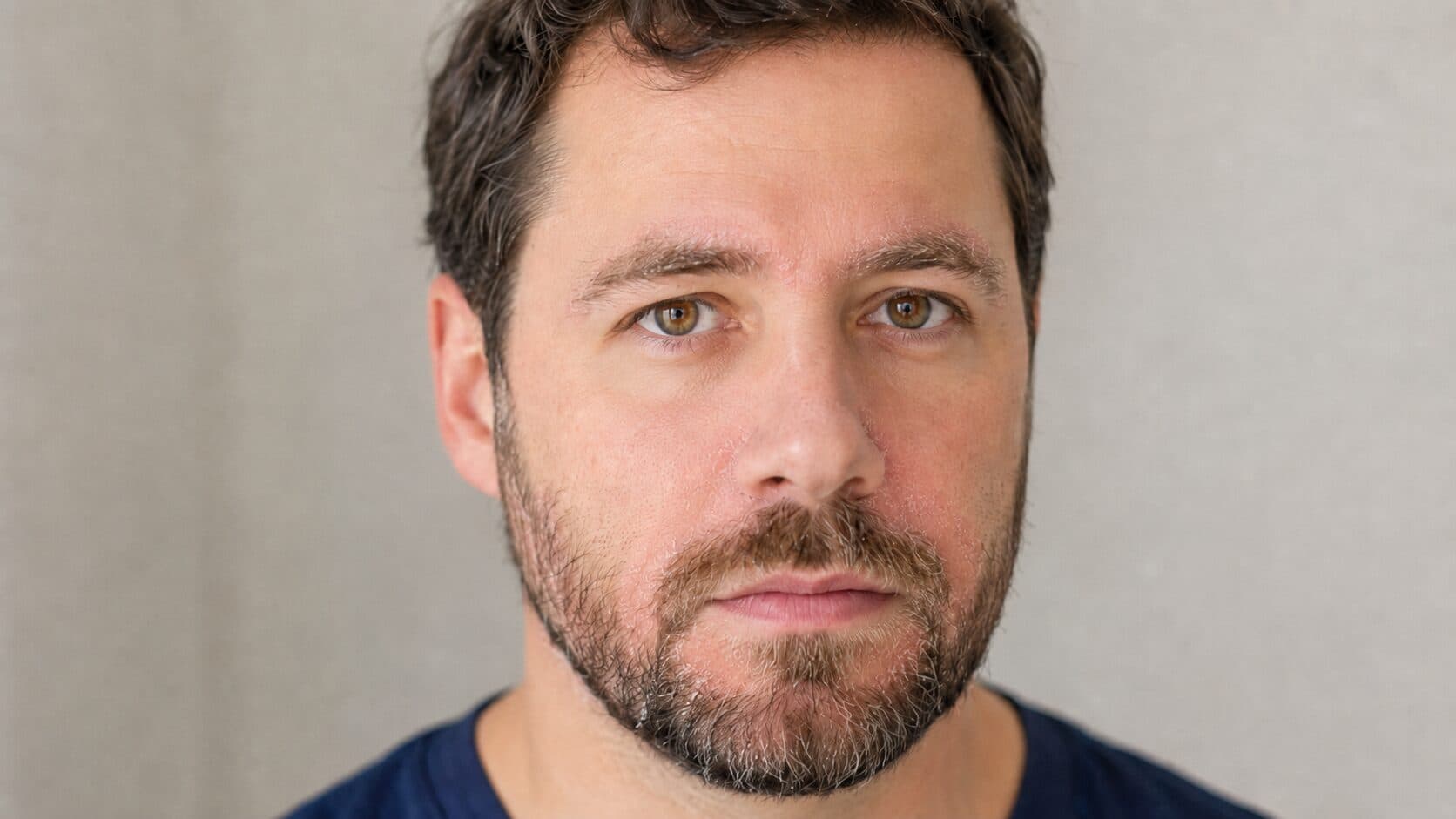
A common inflammatory dermatitis of the skin that usually affects the scalp, face, and other areas with higher oil production.
Before you read: At Skinpaths, we distinguish between opinion and evidence. To write this content, we prioritized indexed medical sources and recommendations from scientific societies. You’ll find the complete bibliography at the end for your reference.
Important: This article is for informational purposes only and does not replace medical advice. If you have any questions, persistent symptoms, or your condition worsens, consult a healthcare professional.
Summary in 60 seconds
- Seborrheic dermatitis is a common, recurring inflammatory skin condition.
- It usually appears in areas with more sebaceous glands, such as the scalp, eyebrows, sides of the nose, beard, ears, chest and some folds.
- It can cause peeling, redness, variable itching, and a feeling of oily or irritated skin.
- Dandruff can be considered a mild form limited to the scalp.
- It is not due to a lack of hygiene and it is not contagious.
- Evidence suggests that several factors are involved: Malassezia yeast, skin oil, individual inflammatory response, and certain triggers such as stress or cold weather.
- Treatment usually combines antifungal shampoos or creams, gentle skin care measures, and, in some cases, topical anti-inflammatories for short periods.
- In adults, it tends to improve and worsen in flare-ups; the realistic goal is to control it, not to promise a definitive cure.
- Consult if there is pain, drainage, patchy hair loss, extensive involvement, rapid worsening, or lack of response.
What is it?
Seborrheic dermatitis is a chronic, recurring inflammatory skin condition. It primarily affects areas rich in sebaceous glands: the scalp, hairline, eyebrows, nasal folds, beard, behind the ears, center of the chest, upper back, and some body folds.
On the scalp, it can manifest as persistent dandruff. On the face, it may appear as a reddish or scaly irritation around the nose, eyebrows, beard, or eyelids. In more pigmented skin, the redness may be less visible, and scaling or areas lighter than the surrounding skin may predominate (Elgash 2019 ).
It is not a contagious infection. Nor does it mean that the person «doesn’t wash properly.» This distinction is important: seborrheic dermatitis may become more noticeable if there is an accumulation of scales, but its origin is not simply due to poor hygiene.
Why does it appear?
The cause cannot be explained by a single factor. Current evidence points to an interaction between skin sebum, normal skin microorganisms, the skin barrier, and individual inflammation.
One of the most studied components is Malassezia , a yeast that normally lives on the skin. In some people, its presence and metabolites can trigger an inflammatory response that manifests as flaking, irritation, and recurring outbreaks (Dall’Oglio 2022 ).
Other factors that may influence this include:
- Oily skin or areas with higher sebum production.
- Individual or family predisposition.
- Stress, lack of sleep, or changes in weather, especially cold and dry conditions.
- Some neurological diseases, such as Parkinson’s disease.
- Immunosuppression, including HIV, transplants, or certain treatments.
- Irritation from hair products, cosmetics, or overly aggressive routines.
Based on the evidence, there is no «one-size-fits-all diet» that cures seborrheic dermatitis. As a matter of clinical prudence, some people identify personal triggers; if this occurs, it may be helpful to record them, without resorting to unnecessary dietary restrictions.
What does it look like and what symptoms does it cause?
The appearance varies depending on the area and skin type. The most common findings are:
- White, yellowish or greasy-looking scales.
- Redness or irritation on light skin.
- Lighter, grayish or scaly areas on more pigmented skin.
- Mild to moderate itching; in some people it can be intense.
- Sensation of oily skin that is also sensitive or tight.
- Outbreaks that improve and reappear.
On the scalp, it may resemble common dandruff, but it is more persistent, with scaly patches and itching. On the face, it typically affects the eyebrows, between the eyebrows, nasolabial folds, beard area, and behind the ears. On the eyelids, it may be associated with blepharitis, with scales along the eyelashes.
In babies, this scalp condition is known as «cradle cap.» It is usually benign and temporary, although it is advisable to consult a doctor if it is extensive, very inflamed, oozes pus, bothers the baby, or is accompanied by other symptoms (Victoire 2019 ).
What can you do today? (clear and concrete steps)
The key is to care for the skin without irritating it and to use safe treatments in an orderly manner.
On the scalp, it may be helpful to use an anti-dandruff or medicated shampoo containing ingredients such as ketoconazole, selenium sulfide, zinc pyrithione, salicylic acid, or coal tar, following the product instructions or those of a healthcare professional. In many cases, it needs to be left on for a few minutes before rinsing to be effective. (Okokon 2015 )
On the face, it’s generally best to use gentle cleansers, avoid harsh exfoliants, and refrain from applying heavy oils to inflamed areas. If outbreaks occur repeatedly, a dermatologist may prescribe antifungal creams, topical anti-inflammatories for short periods, or non-corticosteroid alternatives, depending on the affected area and severity.
Concrete and reasonable measures:
- Wash your scalp regularly, without scratching hard.
- Leave the medicated shampoo on for the indicated time before rinsing it out.
- Alternate products only if there is irritation or loss of response, ideally with medical guidance.
- Use light, non-comedogenic moisturizers if your skin is sensitive.
- Avoid strong fragrances, physical exfoliants, and irritating hair products during the outbreak.
- If it affects the beard or mustache, wash that area gently; sometimes the same shampoo indicated for the scalp can be used carefully on hairy areas, avoiding eyes and mucous membranes.
- Protect your skin from the sun sensibly with appropriate sunscreen; don’t try to get burned to «dry out» the injury.
The goal of treatment is not to promise that it will never return, but to safely reduce outbreaks, itching, and flaking.
What NOT to do?
Seborrheic dermatitis should not be treated as if it were just «dirty skin.» Scratching, harsh exfoliation, or washing with aggressive products can worsen the skin barrier and perpetuate irritation.
Especially avoid:
- Using potent corticosteroids on the face without medical advice.
- Apply corticosteroids for weeks or months because “they work fast”.
- Scratching scabs or scales until wounds are produced.
- Cover up active breakouts with heavy, occlusive makeup every day.
- Apply thick oils to your scalp if you notice that they worsen oiliness or flaking.
- Mixing many active ingredients at once: acids, retinoids, exfoliants, perfumes and medicated shampoos in the same area.
- Using adult anti-dandruff shampoos on babies without consulting a doctor.
Topical corticosteroids can be useful in inflamed outbreaks, but their use should be limited and well indicated by the dermatologist, especially on the face, eyelids and folds, where the skin is more delicate Kastarinen 2014 .
When should I consult?
Consult a dermatologist if any of these signs appear:
- Significant pain, local heat, pus, thick scabs, or foul odor.
- Fever or general malaise along with skin lesions.
- Intense redness, swelling, or rapid worsening.
- Hair loss in patches, round areas without hair or broken hairs.
- Extensive lesions on the scalp, face, chest, back or folds.
- Eyelid involvement with eye pain, sensitivity to light, or visual changes.
- Lack of improvement after several weeks of proper care or medicated shampoo.
- Severe or unusual outbreaks if you have immunosuppression, HIV, a transplant, or treatments that lower your defenses.
- Diagnostic uncertainty: psoriasis, ringworm, contact dermatitis, rosacea, lupus, and other conditions can look similar.
- In babies: marked irritation, suppuration, fever, refusal to eat, poor general condition, or extensive lesions.
What does a dermatologist usually do?
The diagnosis is usually clinical: it is based on the distribution and appearance of the lesions, the history of outbreaks, and the symptoms. The dermatologist examines the scalp, eyebrows, nasal folds, ears, beard, chest, back, and skin folds, and asks about products used, medical history, previous treatments, and aggravating factors.
In some cases, dermatoscopy or trichoscopy may be used to better examine the scalp and differentiate it from psoriasis, tinea pedis, contact dermatitis, or other causes of scaling. If a dermatophyte fungus is suspected, a mycological examination may be ordered. If the lesions are atypical, resistant, or do not fit the usual pattern, a skin biopsy may be considered.
The treatment is tailored to the area:
- On the scalp: antifungal or keratolytic shampoos, anti-inflammatory lotions or foams for short periods if there is a lot of itching or redness.
- On the face: antifungal creams, mild anti-inflammatories for a limited time, or calcineurin inhibitors when repeated corticosteroids are to be avoided.
- In persistent cases: maintenance treatment, rotation of shampoos or prescription alternatives.
- In some countries, topical roflumilast foam is available as a non-steroidal option for certain patients, depending on age, local indication and medical criteria Blauvelt 2024 .
The most realistic expectation is sustained control with fewer outbreaks, less itching, and less flaking, not a guaranteed disappearance forever.
Frequently Asked Questions
Is seborrheic dermatitis contagious?
- No. It is not transmitted through contact, sharing pillows, combs, or towels. It can coexist with normal skin yeast growth, but that doesn’t make it a contagious infection.
Is it the same as dandruff?
- Dandruff can be considered a mild, localized form of seborrheic dermatitis affecting the scalp. Seborrheic dermatitis typically involves more inflammation and can also affect the face, ears, chest, beard, or skin folds.
Is it permanently cured?
- In adults, it typically behaves as a chronic and recurring condition. It can be very well controlled for long periods, but some people experience flare-ups with stress, cold weather, changes in routine, or discontinuation of maintenance.
Can I use anti-dandruff shampoo every day?
- It depends on the product, your hair type, and your skin’s tolerance. Many regimens use medicated shampoos several times a week, followed by maintenance. If your hair becomes dry, irritated, or doesn’t improve, it’s best to adjust the plan with a professional.
Does seborrheic dermatitis cause hair loss?
- On its own, it doesn’t usually cause permanent baldness. However, intense scratching, significant inflammation, or a different condition—such as ringworm, psoriasis, or inflammatory alopecia—can be associated with hair loss. If you have bald patches or noticeable hair loss, consult a doctor.
What happens if it appears on eyebrows, beard, or eyelids?
- It’s common. Eyebrows and beards can be treated with similar methods adapted to the area. Eyelids require more care: avoid irritating products near the eyes and consult a doctor if there is pain, discharge, persistent redness, or blurred vision.
Do babies need treatment?
- Many mild forms of cradle cap improve with gentle care. Do not use adult medicated shampoos or forcefully remove scales. Seek medical attention if the affected area is widespread, becomes inflamed, oozes, appears painful, or if the baby has other symptoms.
Bibliography and sources
- Borda LJ, Wikramanayake TC. Seborrheic dermatitis and dandruff: a comprehensive review. J Clin Investig Dermatol . 2015;3(2):10. doi:10.13188/2373-1044.1000019. Available at: https://pmc.ncbi.nlm.nih.gov/articles/PMC4852869/
- Dall’Oglio F, Nasca MR, Gerbino C, Micali G. An overview of the diagnosis and management of seborrheic dermatitis. Clin Cosmet Investig Dermatol . 2022;15:1537-1548. doi:10.2147/CCID.S284671. Available at: https://pubmed.ncbi.nlm.nih.gov/35967915/
- Okokon EO, Verbeek JH, Ruotsalainen JH, Ojo OA, Bakhoya VN. Topical antifungals for seborrhoeic dermatitis. Cochrane Database Syst Rev. 2015;(5):CD008138. doi:10.1002/14651858.CD008138.pub3. Available at: https://pubmed.ncbi.nlm.nih.gov/25933684/
- Kastarinen H, Oksanen T, Okokon EO, Kiviniemi VV, Airola K, Jyrkkä J, et al. Topical anti-inflammatory agents for seborrhoeic dermatitis of the face or scalp. Cochrane Database Syst Rev. 2014;(5):CD009446. doi:10.1002/14651858.CD009446.pub2. Available at: https://pubmed.ncbi.nlm.nih.gov/24838779/
- Clark GW, Pope SM, Jaboori KA. Diagnosis and treatment of seborrheic dermatitis. Am Fam Physician . 2015;91(3):185-190. Available at: https://www.aafp.org/pubs/afp/issues/2015/0201/p185.html
- Elgash M, Dlova N, Ogunleye T, Taylor SC. Seborrheic dermatitis in skin of color: clinical considerations. J Drugs Dermatol . 2019;18(1):24-27. Available at: https://pubmed.ncbi.nlm.nih.gov/30681789/
- Victoire A, Magin P, Coughlan J, van Driel ML. Interventions for infantile seborrhoeic dermatitis, including cradle cap. Cochrane Database Syst Rev. 2019;(3):CD011380. doi:10.1002/14651858.CD011380.pub2. Available at: https://pubmed.ncbi.nlm.nih.gov/30828791/
- Blauvelt A, Draelos ZD, Stein Gold L, Alonso-Llamazares J, Bhatia N, DuBois J, et al. Roflumilast foam 0.3% for adolescent and adult patients with seborrheic dermatitis: a randomized, double-blinded, vehicle-controlled, phase 3 trial. J Am Acad Dermatol . 2024;90(5):986-993. doi:10.1016/j.jaad.2023.12.065. Available at: https://pubmed.ncbi.nlm.nih.gov/38253129/
- American Academy of Dermatology Association. Seborrheic dermatitis: diagnosis and treatment. AAD; 2024. Available at: https://www.aad.org/public/diseases/az/seborrheic-dermatitis-treatment
- British Association of Dermatologists. Seborrhoeic dermatitis. Patient Information Sheetlet. BAD; 2023. Available at: https://www.bad.org.uk/pils/seborrhoeic-dermatitis
- DermNet. Seborrhoeic dermatitis: causes and treatment. DermNet New Zealand. Available at: https://dermnetnz.org/topics/seborrhoeic-dermatitis
- NHS. Dandruff. NHS Health A to Z. Available at: https://www.nhs.uk/conditions/dandruff/
- Institute for Quality and Efficiency in Health Care. Overview: seborrheic dermatitis. InformedHealth.org . 2024. Available at: https://www.ncbi.nlm.nih.gov/books/NBK532846/
- Tucker D, Syed HA, Masood S. Seborrheic dermatitis. StatPearls . Treasure Island (FL): StatPearls Publishing; 2024. Available at: https://www.ncbi.nlm.nih.gov/books/NBK551707/
Categories: For everyone · Itch · Seborrheic dermatitis · Skin diseases · Skin redness

Content reviewed by
Dr. Rodolfo Suárez
Médico Patólogo y Dermatólogo Master en Patología Cutánea Avanzada
- Published
- September 18, 2026
- Updated
- September 23, 2026
Medically reviewed by specialists
Our content is based on current scientific evidence and clinical protocols.