
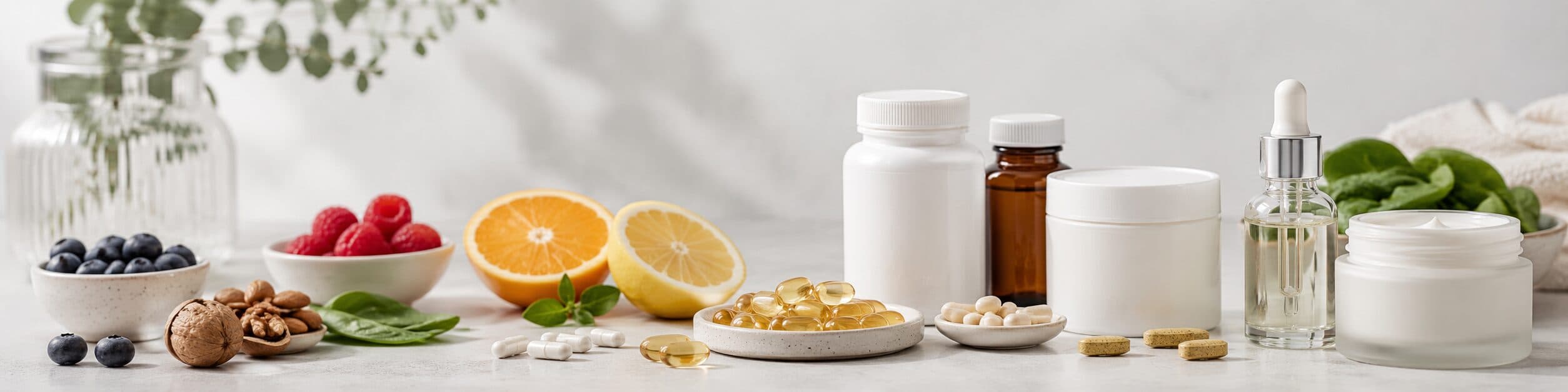
Supplements can have a place in skincare, but they aren’t universal shortcuts. The important question isn’t which one is trendy, but when it makes sense to use them, what evidence exists, and what risks should be avoided.
Before you read: At Skinpaths, we distinguish between opinion and evidence. To write this content, we prioritized indexed medical sources and recommendations from scientific societies. You’ll find the complete bibliography at the end for your reference.
Important: This article is for informational purposes only and does not replace medical advice. If you have any questions, persistent symptoms, or your condition worsens, always consult a healthcare professional.
Summary in 60 seconds
- Supplements are not a mandatory part of a healthy skin routine. For many people, a proper diet, adequate sleep, sun protection, management of underlying health conditions, and a simple routine have a greater impact than adding capsules.
- They can be useful when they correct a real deficiency, for example iron, vitamin D, zinc, vitamin B12 or other nutrients depending on the clinical context.
- But taking more than necessary doesn’t mean getting more benefit; sometimes it means increasing the risk.
- Oral collagen shows promising evidence, particularly regarding hydration and elasticity, but changes are usually modest and do not replace sunscreen, prescribed retinoids, procedures, or basic lifestyle habits. Available meta-analyses suggest a benefit, although the quality and heterogeneity of the studies necessitate realistic expectations.
- Biotin is one of the most over-selling supplements for hair, skin, and nails. Evidence in people without a deficiency is limited, and high doses can interfere with laboratory tests, including hormonal and cardiac tests.
- “Natural” supplements can also cause adverse effects, interact with medications, or be mislabeled. The FDA does not approve dietary supplements for safety and efficacy before they are sold; therefore, selection and indication matter.
What are supplements and why do they matter?
A dietary supplement may contain vitamins, minerals, amino acids, proteins such as collagen, fatty acids, probiotics, herbal extracts, or other ingredients. In dermatology, they are promoted for «glowing skin,» acne, blemishes, hair loss, brittle nails, eczema, skin aging, or «detox.»
The problem is that the skin doesn’t function in isolation. It reflects genetics, hormones, inflammation, sun exposure, medications, illnesses, diet, sleep, and stress.
This matters because many supplements are purchased without a diagnosis. A person experiencing hair loss may have an iron deficiency, thyroid disease, telogen effluvium, androgenetic alopecia, scalp inflammation, or medication side effects. In these cases, taking «hair vitamins» can delay diagnosis.
Safety also matters. “Natural” does not mean harmless. Safety depends on the ingredient, the dosage, the method of preparation, the product quality, and the individual’s health status. NIH SDGs 2023
How do they work?
Supplements can act in several ways, but none guarantee that the nutrient will «go directly» to the skin.
1. Correct deficiencies
When an essential nutrient is lacking, the skin, hair, or nails can be affected. Correcting this deficiency can help. The key is to demonstrate or reasonably suspect the deficiency, not to supplement blindly.
2. To provide «building blocks» for the skin
Proteins, amino acids, vitamin C, zinc, and other nutrients participate in processes such as collagen synthesis, tissue repair, and barrier function. But the body distributes nutrients according to biological priorities. Taking collagen doesn’t mean that the collagen will be deposited intact in a wrinkle.
3. Modulate inflammation
Omega-3 fatty acids, probiotics, zinc, and nicotinamide have been studied in various inflammatory and photodamage-related conditions. Some lines of research are promising, but not all justify routine use in the general population.
4. Participate in antioxidant defense
Vitamins C and E, carotenoids, and polyphenols all play a role in antioxidant systems. However, megadoses of antioxidants are not synonymous with better skin and can pose risks, especially when combined with medications or medical conditions.
Supplements don’t «go straight» to the skin: the body processes, distributes, and uses them according to its priorities. That’s why they work best when they correct a deficiency or support a specific indication.
How to choose supplements and how to use them?
1. Start with the correct question
Before buying, define your goal: dryness? hair loss? acne? brittle nails? sun damage? eczema? blemishes?
Every problem has different causes. A supplement should not be used as a substitute for diagnosis.
2. Prioritize healthy eating over capsules
For most people, the foundation is a diet rich in protein, fruits, vegetables, legumes, healthy fats, water, and micronutrients. The American Academy of Dermatology cautions that the effectiveness of popular supplements such as biotin, collagen, and probiotics can be inconsistent, especially when used without a clear indication. AAD 2024
3. Identify when it might make sense
Supplementation may be considered when there is:
- Confirmed deficiency or high clinical suspicion.
- Restrictive diets, unplanned veganism, bariatric surgery, or absorption problems.
- Pregnancy, breastfeeding or stages of greater need, always with professional guidance.
- Specific diseases where the doctor indicates a nutrient.
- Particular high dermatological risk, for example, use of nicotinamide in some patients with a history of repeated non-melanoma skin cancer, under medical indication.
Oral nicotinamide, for example, showed a reduction in new non-melanoma skin cancers and actinic keratoses in a phase 3 trial in high-risk patients; however, this does not make it a general cosmetic supplement or a replacement for sun protection. Chen 2015
4. Review doses, duplications, and combinations
Many «skin, hair, and nail» products combine biotin, zinc, selenium, vitamin A, vitamin E, collagen, herbal extracts, and other ingredients. The risk arises when a person takes several products at once and unknowingly doubles the dose.
Special care should be taken with:
- Vitamin A: In excess, it can be toxic. During pregnancy, high doses of preformed vitamin A can cause fetal harm. NIH SDGs 2025
- Vitamin E: High doses may increase the risk of bleeding, especially in people using blood thinning agents or who have a bleeding risk. NIH SDGs 2021
- Zinc: It may be helpful in some situations, but high or prolonged doses can cause gastrointestinal discomfort and disrupt the balance with other minerals, such as copper. NIH SDGs 2026
- Biotin: It is not usually necessary in people without deficiency and may alter laboratory results. Patel 2017
- Omega-3: may interact with drugs that affect coagulation; it is advisable to consult a doctor if you are using anticoagulants, antiplatelet drugs or frequent anti-inflammatories.
5. Buy wisely, not based on promises
Look for products with clear labels, specific dosages, batch numbers, expiration dates, and third-party certification when available. Avoid products that promise to “cure,” “detoxify,” “reverse aging,” “remove blemishes,” or “block the sun from within.”
Supplements do not go through the same pre-approval process as drugs. The FDA notes that companies are responsible for ensuring their supplements meet safety standards before marketing them, but the agency does not approve them for safety and efficacy before they reach the market. FDA 2022
Before choosing a supplement, the question should not be «which one is trendy,» but what problem do I want to solve, what evidence exists, and if there are any risks for me.
Frequent supplements: what to know
Collagen
Hydrolyzed collagen is one of the most studied supplements for skin aging. Evidence suggests small to moderate improvements in hydration and elasticity, especially after several weeks of use. Even so, it should not be presented as a guaranteed “wrinkle repairer.” ( Pu 2023)
The reasonable thing: it can be considered as a complement if the person tolerates it, understands that the effect is modest and does not neglect photoprotection, sleep, diet and dermatological routine.
Biotin
Biotin is necessary for metabolism, but true deficiency is rare. Available reviews do not support its routine use for hair or nail growth in healthy individuals without a proven deficiency. Patel 2017
Most importantly: always inform your doctor if you are taking biotin before any blood tests. It can interfere with thyroid, hormone, and troponin tests, the latter being used in cardiac evaluation. FDA 2022
Vitamin D
Vitamin D is important for bone health, immunity, and many other bodily functions. However, it shouldn’t be taken as a «skin supplement» without a specific reason. It makes sense to measure or prescribe it based on risk factors such as low sun exposure, heavily covered skin, malabsorption, osteoporosis, pregnancy, or other medical conditions.
Zinc
Zinc plays a role in immunity, wound healing, and skin function. It has been studied as a supplement in acne treatment, with variable results; it may be helpful in selected cases, but it does not replace first-line dermatological treatments. Vaidya 2024
It is not advisable to take high levels of zinc for months without supervision.
Omega-3
Omega-3 fatty acids have anti-inflammatory effects and have been studied in acne, psoriasis, atopic dermatitis, and other inflammatory conditions. However, the evidence does not yet support recommending them as a universal skin treatment.
It may be reasonable to increase food sources such as fatty fish, seeds, and nuts, and reserve supplements for specific indications.
Probiotics
Probiotics are live microorganisms with potential benefits depending on the strain, dose, and context. In eczema and other inflammatory conditions, results are mixed: some formulations show promise, but not all probiotics are suitable for every situation.
The National Center for Complementary and Integrative Health notes that there is evidence for some uses, but for many indications the evidence remains limited. NCCIH 2024
Vitamin C
Vitamin C plays a role in collagen synthesis and antioxidant defense. However, in people with a proper diet, more vitamin C doesn’t necessarily translate to better skin.
Its best source is usually food: citrus fruits, kiwi, peppers, strawberries and green vegetables.
Nicotinamide
Nicotinamide, a form of vitamin B3, has been studied for the prevention of some skin cancers in high-risk individuals. It should not be confused with niacin, which can cause flushing, nor should it be used as an “oral sunscreen.”
Its preventive use should be individualized, especially in people with a history of non-melanoma skin cancer or recurrent actinic keratoses. Chen 2015
Common mistakes
Taking supplements without knowing what problem you want to solve.
“Improving the skin” is too broad. Dull skin, hair loss, acne, blemishes, and dryness don’t all have the same cause.
Using supplements as a replacement for sunscreen.
No supplement can replace sunscreen, clothing, shade, and reducing UV exposure.
Combine several oral beauty products.
The combination of multivitamin, collagen with biotin, hair gummies, and antioxidant capsules can double the dose of vitamins and minerals.
Believing that if it is natural it has no risks.
Herbal extracts, megadoses of vitamins and minerals may interact with medications or affect liver, kidney, blood clotting and laboratory results.
Do not inform the doctor.
Supplements should be mentioned just like medications, especially before surgery, blood tests, pregnancy, cancer treatments, or the use of anticoagulants.
The most common mistake is adding capsules without a diagnosis: combining products “for skin, hair and nails” can double the dose, delay a necessary consultation and increase unnecessary risks.
Myths vs. Facts
Myth: “The collagen I take goes straight to the skin.”
Fact: It is digested into peptides and amino acids. It can support synthesis processes, but it is not deposited intact where one chooses.
Myth: “Biotin always improves hair, skin, and nails.”
Fact: It may help if there is a deficiency, but in people without a deficiency the evidence is limited and it may interfere with analysis.
Myth: “Vitamins are safe because they are sold without a prescription.”
Fact: Some vitamins accumulate or interact with medications. Vitamin A and vitamin E require special care at high doses.
Myth: “An antioxidant supplement protects against the sun.”
Fact: It does not replace sunscreen or physical photoprotection measures.
Myth: “If an influencer recommends it, it must work.”
Fact: a useful recommendation should be based on evidence, dosage, safety, clinical context, and transparency regarding conflicts of interest.
Frequently Asked Questions
Do I always need to take supplements to have good skin?
- Not necessarily. Most people should start with sun protection, adequate nutrition, sleep, stress management, physical activity, and a simple routine. Supplements make more sense when there is a deficiency, a medical recommendation, or a specific goal.
Does oral collagen work?
- It may modestly improve hydration and elasticity in some people, according to available studies. It is not a substitute for sunscreen, prescribed retinoids, or dermatological treatments. Nor does it «fill» wrinkles like a procedure.
Does biotin improve nails or hair?
- It is only clearly reasonable when there is a deficiency or specific condition. In healthy individuals, the evidence is limited. Furthermore, it can alter laboratory tests, so it should always be reported.
Which supplement is best for blemishes?
- No supplement is a primary treatment for hyperpigmentation. Hyperpigmentation requires diagnosis: melasma, solar lentigines, post-inflammatory hyperpigmentation, or other causes. The foundation of treatment is usually strict sun protection and appropriate topical therapy.
Do probiotics help with eczema?
- The evidence is mixed. Some studies suggest benefits in specific contexts, but not all probiotics are created equal. They should not replace hydration, irritant control, or medical treatment during flare-ups.
Can I take multiple supplements at the same time?
- It’s not advisable to do so without checking the dosage and ingredients. Many products overlap and can add unnecessary amounts of vitamin A, vitamin E, zinc, selenium, or biotin.
How do I know if a supplement is reliable?
- Look for transparency regarding ingredients, dosage, third-party certifications (where available), the absence of exaggerated medical claims, and support from human studies. Avoid products that promise to cure diseases or replace treatments.
Bibliography and sources
- US Food and Drug Administration. FDA 101: Dietary Supplements [Internet] . Silver Spring: FDA; 2022 [cited 2026 May 31] . https://www.fda.gov/consumers/consumer-updates/fda-101-dietary-supplements
- US Food and Drug Administration. Information for Consumers on Using Dietary Supplements [Internet] . Silver Spring: FDA; 2022 [cited 2026 May 31] . https://www.fda.gov/food/dietary-supplements/information-consumers-using-dietary-supplements
- National Institutes of Health, Office of Dietary Supplements. Dietary Supplements: What You Need to Know [Internet] . Bethesda: NIH; 2023 [cited 2026 May 31] . https://ods.od.nih.gov/factsheets/WYNTK-Consumer/
- American Academy of Dermatology. Supplement secrets unveiled: debunking common myths about beauty boosters [Internet] . Rosemont: AAD; 2024 [cited 2026 May 31] . https://www.aad.org/news/supplements-debunking-common-myths
- Pu SY, Huang YL, Pu CM, Kang YN, Hoang KD, Chen KH, et al. Effects of oral collagen for skin anti-aging: a systematic review and meta-analysis. Nutrients. 2023;15(9):2080. https://pubmed.ncbi.nlm.nih.gov/37432180/
- Choi FD, Sung CT, Juhasz MLW, Mesinkovska NA. Oral collagen supplementation: a systematic review of dermatological applications. J Drugs Dermatol. 2019;18(1):9-16. https://pubmed.ncbi.nlm.nih.gov/30681787/
- Patel DP, Swink SM, Castelo-Soccio L. A review of the use of biotin for hair loss. Skin Appendage Disord. 2017;3(3):166-169. https://pubmed.ncbi.nlm.nih.gov/28879195/
- US Food and Drug Administration. Biotin interference with troponin lab tests: assays subject to biotin interference [Internet] . Silver Spring: FDA; 2022 [cited 2026 May 31] . https://www.fda.gov/medical-devices/in-vitro-diagnostics/biotin-interference-troponin-lab-tests-assays-subject-biotin-interference
- National Institutes of Health, Office of Dietary Supplements. Vitamin A and Carotenoids: Fact Sheet for Consumers [Internet] . Bethesda: NIH; 2025 [cited 2026 May 31] . https://ods.od.nih.gov/factsheets/VitaminA-Consumer/
- National Institutes of Health, Office of Dietary Supplements. Vitamin E: Fact Sheet for Health Professionals [Internet] . Bethesda: NIH; 2021 [cited 2026 May 31] . h ttps://ods.od.nih.gov/factsheets/VitaminE-HealthProfessional/
- National Institutes of Health, Office of Dietary Supplements. Zinc: Fact Sheet for Health Professionals [Internet] . Bethesda: NIH; 2026 [cited 2026 May 31] . https://ods.od.nih.gov/factsheets/Zinc-HealthProfessional/
- Vaidya T, Feldman SR, Fleischer AB Jr. Evaluating common ingredients contained in dietary acne supplements. J Clin Aesthet Dermatol. 2024;17(3):29-35. https://pmc.ncbi.nlm.nih.gov/articles/PMC10941853/
- National Center for Complementary and Integrative Health. Probiotics: Usefulness and Safety [Internet] . Bethesda: NCCIH; 2024 [cited 2026 May 31] . : https://www.nccih.nih.gov/health/probiotics-usefulness-and-safety
- Chen AC, Martin AJ, Choy B, Fernández-Peñas P, Dalziell RA, McKenzie CA, et al. A phase 3 randomized trial of nicotinamide for skin-cancer chemoprevention. N Engl J Med. 2015;373(17):1618-1626. https://pubmed.ncbi.nlm.nih.gov/26488693/
Categories: For everyone

Content reviewed by
Dr. Rodolfo Suárez
Médico Patólogo y Dermatólogo Master en Patología Cutánea Avanzada
- Published
- September 18, 2026
- Updated
- September 23, 2026
Medically reviewed by specialists
Our content is based on current scientific evidence and clinical protocols.