
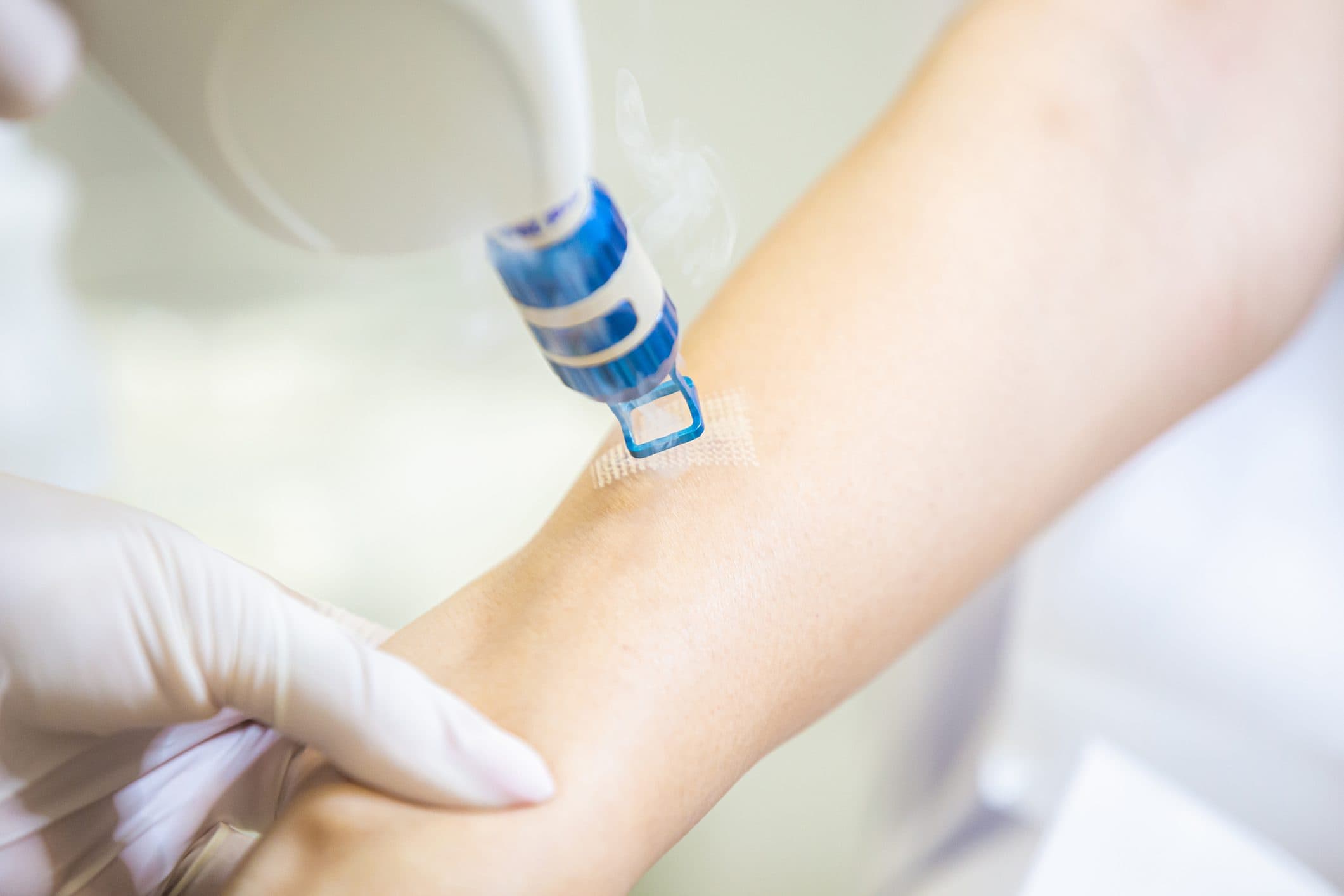
If a scar bothers you because it’s red, very noticeable, feels tight, or even causes symptoms, it’s normal to wonder if laser treatment can really help. In this article, I’ll explain, without technical jargon or exaggerated promises, what a laser is, what types are used on scars and why, what changes are usually realistic, and what precautions make all the difference for safe treatment. The goal is for you to finish reading with a clear understanding of what’s worth considering, what isn’t, and how to make an informed decision.
Before you read: At Skinpaths, we distinguish between opinion and evidence. To write this content, we prioritized indexed medical sources and recommendations from scientific societies. You’ll find the complete bibliography at the end for your reference.
Important: This article is for informational purposes only and does not replace medical advice. If you have any questions, persistent symptoms, or your condition worsens, consult a healthcare professional.
Summary in 60 seconds
- A laser is a highly concentrated light source that allows you to «work» on specific layers of the skin with precision.
- In scars, the goal is usually to improve texture, color, relief and symptoms (itching, tightness or pain), not to «erase them completely».
- There are lasers that target redness (vascular lasers, such as pulsed light, which although not a laser per se is often used with good results) and others that target texture and stiffness (for example, fractional CO₂ laser).
- The best option depends on the type of scar, its «age», its location and your skin tone.
- In expert hands it can bring improvement, but it requires realistic expectations, photoprotection and care both before and after treatment.
What is a laser?
A laser is a beam of light with very specific characteristics (for example, a single wavelength) that allows energy to be directed to a target on the skin. This target can be, depending on the laser and the problem being treated, blood vessels (redness), water (skin layers), or pigment. In scars, this energy is used to modulate scar tissue and promote gradual changes in appearance and certain symptoms. Waibel 2018
What types of lasers are used for scars?
In simple terms, there are usually two main objectives:
-
Reduce redness and sometimes symptoms such as itching
-
Vascular laser (e.g., pulsed dye laser/PDL): This is frequently used when the scar is red or very active. Queen Victoria Hospital NHS Foundation Trust 2025
-
Improve texture, rigidity, relief or tightness
-
Ablative fractional laser (e.g., fractional CO₂; in some cases Er:YAG): creates micro-treatment zones that stimulate collagen remodeling and can help with thicker, rigid, or mobility-limiting scars (e.g., some post-surgical or burn scars). Newcastle upon Tyne Hospitals NHS Foundation Trust 2021
There are also non-ablative fractional lasers (with generally shorter recovery times) that may be considered in selected scenarios when faster recovery is prioritized; the exact choice depends on the available equipment and clinical assessment. Sequeira Campos 2025
How does laser treatment work on a scar?
It depends on the type of laser, but the concept is similar: to cause controlled changes so that the scar tissue remodels itself over time.
-
In vascular lasers, the focus is on blood vessels that contribute to redness and, in some people, to symptoms.
-
In fractional lasers, microcolumns of treatment are generated: small zones where the body initiates repair and remodeling. Over weeks to months, this can result in a scar that is more flexible, thinner, or has a more uniform texture. Sequeira Campos 2025 Chen 2024
What is the treatment like in real life?
In practice, laser treatment is usually organized as follows:
-
Initial medical evaluation: type of scar (atrophic, hypertrophic, keloid, contracture), color, hardness, symptoms, location and skin tone.
-
Goal-oriented plan: sometimes the main goal is redness; other times, texture/rigidity; sometimes, both in stages.
-
Sessions: There may be several, spaced weeks apart. Improvement tends to be gradual . Waibel 2018
What can I do today to optimize results? (safe and concrete measures)
-
Define your goal honestly: are you more concerned about color, relief, texture, itching, or tightness? This will guide the choice of treatment.
-
Constant sun protection in the area (especially if it is exposed): reduces the risk of color changes and helps to make the process safer.
-
Do not manipulate (scratch, “polish”, pick off scabs).
-
If the scar is recent and the wound has already closed, ask about silicone and basic care (not everything applies to everyone; it’s best to personalize the approach). NHS 2023
What NOT to do? (common mistakes)
-
The main goal is to «erase or make the scar disappear»: the usual aim is to improve , not to make it disappear.
-
Treating tanned or recently sunburned skin: increases the risk of unwanted effects, including color changes.
-
Undergoing laser treatment without a clear medical diagnosis of the type of scar (for example, treating a keloid as if it were a common scar).
-
Underestimating the post-procedure period: much of the outcome depends on proper aftercare. Queen Victoria Hospital NHS Foundation Trust 2025
When should I consult?
Consult your healthcare professional as a priority if any of these scenarios occur:
-
Progressive redness, heat, increasing pain or discharge (possible infection).
-
Extensive blisters, open wounds, or scabs with a bad smell.
-
Marked color change that is concerning (intense darkening or very pale areas).
-
Scar that limits movement (over joints) or persistent pain.
-
If you have a history of keloids and are considering laser treatment: careful planning is required. NHS 2023
What does a dermatologist usually do?
In a well-structured consultation, the professional usually:
-
Confirm scar type and achievable goals.
-
Assess skin tone and risk of pigmentary changes.
-
Propose type of device (vascular vs fractional), parameters and indicative number of sessions.
-
Indicate pre/post care and warning signs.
-
If the scars are hypertrophic or keloid, consider a combined treatment plan (laser alone is not always sufficient). Leszczynski 2022
Frequently Asked Questions
Does laser treatment remove a scar?
- Generally, no. It can improve color, texture, and symptoms, but scarring is part of the skin’s repair process. The reasonable goal is improvement , not complete disappearance. NHS 2023
Which laser is used for red scars?
- A vascular approach, such as pulsed dye laser (PDL) , is usually considered when redness and other symptoms are predominant. Queen Victoria Hospital NHS Foundation Trust 2025
And what about for thick, hard, or tight scars?
- Fractional ablative laser (e.g., fractional CO₂) is frequently considered when the primary target is texture, stiffness, or tightness. Newcastle upon Tyne Hospitals NHS Foundation Trust 2021
How many sessions are needed?
- It varies. It’s common to work in series and evaluate changes over weeks to months . Waibel 2018
Hurts?
- The sensation depends on the equipment used, parameters, and area. Measures to improve tolerance are often used, and the team explains what to expect in the post-procedure. Queen Victoria Hospital NHS Foundation Trust 2025
What risks are involved?
- There may be redness, scabbing, temporary changes in color, and, rarely, complications such as infection or worsening of the scar. The risk varies depending on the type of laser, skin type, and aftercare. Sequeira Campos 2025
Can laser treatment be used on keloids?
- It can sometimes be part of a combined approach, but management is more complex and the risk of recurrence exists. Specialist evaluation is always advisable. Leszczynski 2022
Bibliography and sources
NHS 2023
NHS 2023
Waibel 2018
Newcastle upon Tyne Hospitals NHS Foundation Trust 2021
Queen Victoria Hospital NHS Foundation Trust 2025
Queen Victoria Hospital NHS Foundation Trust 2025
Sequeira Campos 2025
Leszczynski 2022
Chen 2024
Categories: For everyone

Content reviewed by
Dr. Rodolfo Suárez
Médico Patólogo y Dermatólogo Master en Patología Cutánea Avanzada
- Published
- September 18, 2026
- Updated
- September 23, 2026
Medically reviewed by specialists
Our content is based on current scientific evidence and clinical protocols.