
This article explains what fungal skin infections (tinea) are, how to recognize their most common signs, why they occur, and what measures can help from the start. It also clarifies what mistakes to avoid, when to consult a doctor, and how a dermatologist typically confirms and treats this type of infection.
Before you read: At Skinpaths, we distinguish between opinion and evidence. To write this content, we prioritized indexed medical sources and recommendations from scientific societies. You’ll find the complete bibliography at the end for your reference.
Important: This article is for informational purposes only and does not replace medical advice. If you have any questions, persistent symptoms, or your condition worsens, consult a healthcare professional.
«Fungal infections of the skin» are not a single disease. It’s a common way of referring to several superficial infections caused by fungi or yeasts. Among the most frequent are ringworm, athlete’s foot, jock itch, cutaneous candidiasis, and tinea versicolor.
Most cases are not serious, but they can be mistaken for eczema, psoriasis, allergies, irritations, or other skin conditions. Therefore, if a lesion doesn’t improve, spreads, becomes painful, oozes, or affects sensitive areas, it’s advisable to consult a doctor. A correct diagnosis prevents unnecessary treatments and reduces the risk of recurrence.
Summary in 60 seconds
- Fungal infections of the skin often cause spots, scaly patches, itching, redness, or changes in color.
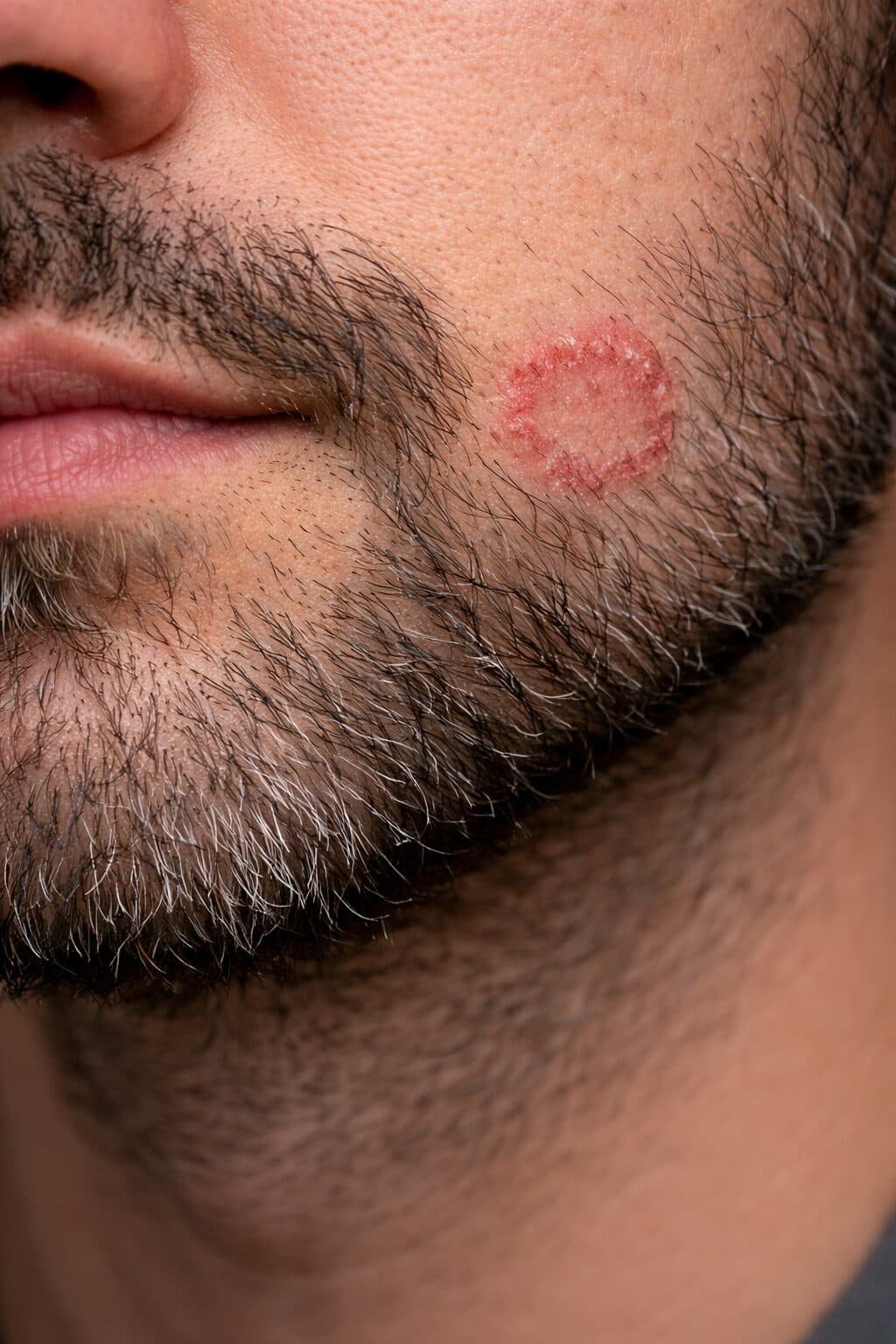
- Ringworm of the body can look like a «ring» lesion, although it does not always have that shape.
- Athlete’s foot frequently affects the spaces between the toes and can cause burning, cracking, or peeling.
- Jock itch appears in the groin and inner thighs, especially in moist or friction areas.
- Pityriasis versicolor usually produces light, pink, or brown spots on the trunk, neck, and arms.
- Cutaneous candidiasis frequently appears in moist folds, such as the groin, armpits, under the breasts, or abdomen.
- Not every scaly patch is a fungus: eczema, psoriasis, and other diseases can look similar.
- It is not advisable to use corticosteroid creams without a diagnosis, because they can mask or worsen ringworm.
- If there is pain, pus, fever, hair loss, affected nails, or lack of improvement, medical evaluation is recommended.
- The dermatologist can confirm the diagnosis with clinical examination, skin scraping, microscopy, culture, or additional tests.
What are fungal infections of the skin?
Fungal skin infections are superficial infections caused by microorganisms that can grow on the outer layer of the skin, hair, or nails. The most common are dermatophytes, responsible for many types of ringworm: tinea corporis, tinea pedis, tinea cruris, tinea capitis, and some nail infections (Leung 2020 ).
There are also infections caused by yeasts. For example, Candida can affect moist skin folds and produce cutaneous candidiasis, while Malassezia is associated with pityriasis versicolor, a common cause of light, pink, or brown patches on the trunk (Metin 2018, Łabędź 2023 ).
Why do they appear?
Fungal infections thrive in warm, moist, and humid environments. This is why they are common on the feet, groin, skin folds, and areas covered by tight or damp clothing for extended periods. Sweat, closed shoes, damp athletic wear, and poor ventilation can all contribute to their development.
Dermatophyte ringworm can be transmitted through direct contact with an infected person or animal, or through contaminated objects such as towels, clothing, footwear, combs, or hats. It can also be acquired from shared moist surfaces, although the likelihood depends on the type of exposure and the skin’s condition (NHMRC 2024 ).
Not all skin fungi behave the same. Ringworm is usually contagious. In contrast, pityriasis versicolor is associated with an overgrowth of Malassezia , a yeast that can be part of the normal skin flora; therefore, it is not treated as a highly contagious infection in the usual sense (Łabędź 2023 ).
Some situations increase the risk of infection or recurrence: intense sweating, diabetes, immunosuppression, obesity, wearing tight clothing, living with infected people or pets, involvement of the feet or nails, and inappropriate use of corticosteroid creams on lesions that were actually ringworm.
What do they look like and what symptoms do they cause?
The appearance depends on the type of infection, the affected area, and skin color. On fair skin, it may appear redder or pinker; on darker or black skin, it may appear brown, purplish, grayish, or darker than the surrounding skin. Scaling, itching, and progressive growth of the lesion can be indicative, but they do not always confirm the diagnosis.
Tinea corporis can appear as a rounded plaque with a more active, scaly border, sometimes with central clearing. This «ring» appearance is characteristic, but not present in all cases. In addition, other diseases can mimic it, such as nummular eczema, psoriasis, granuloma annulare, or contact dermatitis (Ely 2014 ).
Athlete’s foot usually affects the spaces between the toes, especially between the fourth and fifth toes. It can cause whitish skin, scaling, itching, burning, odor, or small cracks. In some cases, it affects the sole with diffuse scaling, as if the skin were dry or thickened (Leung 2023 ).
Jock itch appears in the groin and can spread to the inner thighs. It usually causes itching, well-defined borders, and scaling. It is more common in areas with moisture, friction, sweating, or a fungal infection on the feet that is transmitted through scratching, clothing, or towels.
Pityriasis versicolor produces light, pink, beige, or brown patches with fine scaling. It commonly affects the chest, back, neck, and arms. Many people notice it more after sun exposure because the affected areas do not pigment like the rest of the skin (Leung 2022 ).
Cutaneous candidiasis usually appears in moist skin folds, such as the armpits, groin, under the breasts, abdomen, diaper area, or between the toes. It can cause bright redness, burning, itching, fissures, and small lesions around the main plaque (Metin 2018 ).
What can you do today?
- Keep the area clean and dry. After bathing, thoroughly dry the folds, between the toes, and the groin. Do not rub vigorously; pat dry gently to avoid further irritation.
- Change your socks, underwear, and workout clothes daily. Avoid staying in sweaty clothes for several hours. If you exercise, be sure to shower and change afterward. The goal is to reduce moisture, friction, and skin maceration.
- Avoid sharing towels, clothing, shoes, combs, hats, or items that come into direct contact with the skin. If ringworm is suspected in the home, check if other people have similar lesions and consider the possibility of affected pets, especially if there are children or scalp lesions (NHMRC 2024 ).
- For small, typical lesions of tinea corporis, athlete’s foot, or jock itch, some over-the-counter topical antifungals may be helpful if used according to the product instructions. However, not all scaly lesions are fungal, and not all fungal infections are treated the same way. If the lesion does not improve, spreads, or recurs frequently, consult AAD 2026 .
If the lesion affects the scalp, beard, nails, face, genitals, or an area near the eyes, it’s best not to self-medicate. These locations usually require a specialist medical evaluation and, in some cases, prescription treatment.
What NOT to do?
- Do not use corticosteroid creams without a diagnosis. Although they may temporarily reduce redness or itching, they can also alter the appearance of ringworm, facilitate its spread, and delay diagnosis. This situation is known as tinea incognito (CDC 2026 ).
- Do not stop treatment as soon as the itching subsides if your doctor or the product instructions indicate that you should continue treatment for more days. Stopping too soon may lead to relapses or persistence of the infection.
- Don’t use topical antibiotics or combinations of several creams «just in case.» Antibiotics don’t treat fungi, and some combinations can irritate the skin or mask the problem.
- Do not scratch or pick at the flaking skin. Scratching can cause wounds, promote bacterial superinfection, and spread the lesion to other areas.
- Don’t assume every white, red, brown, or scaly patch is a fungal infection. Eczema, psoriasis, seborrheic dermatitis, vitiligo, irritative intertrigo, contact allergies, and other conditions can look similar. If in doubt, a medical diagnosis is safer than treating blindly for weeks.
When should I consult?
Consult a healthcare professional, ideally a dermatologist, if any of these situations occur:
- Injury to the scalp, beard, nails, face, genitals or near the eyes.
- Hair loss, painful plaques, pus, thick scabs, or severe inflammation.
- Fever, general malaise, or painful lymph nodes.
- Extensive, multiple, recurrent, or rapidly progressing lesions.
- Lack of improvement after correctly using a topical treatment.
- Diabetes, immunosuppression, pregnancy, breastfeeding, or use of medications that reduce defenses.
- Suspected infection in children, pets, or several people in the household.
- Previous use of corticosteroid creams and lesion that changed in appearance or spread.
- Reasonable doubt as to whether it is a fungal infection, eczema, psoriasis, or another disease.
Ringworm of the scalp and nail infections usually require medical evaluation because they often need specific and longer treatments than small skin lesions AAD 2026 .
What does a dermatologist usually do?
The dermatologist reviews the patient’s medical history: duration of symptoms, treatments used, contact with animals, living with affected individuals, sports activities, sweating, gym use, travel, previous illnesses, and medications. They also ask about creams used previously, especially if they contain corticosteroids.
Then he examines the skin, nails, and, if applicable, the scalp. Sometimes he checks areas that seem unrelated. For example, jock itch can coexist with athlete’s foot, and a nail or foot infection can act as a reservoir.
When the lesion is typical, the diagnosis can be clinical. When there is doubt, the dermatologist may perform a gentle skin scraping to analyze scales under a microscope with potassium hydroxide. They may also order a culture, nail examination, dermatoscopy, or Wood’s lamp examination in selected cases (Ely 2014 ).
A biopsy is not usually necessary in common superficial fungal infections, but may be considered if the lesion is atypical, does not respond to treatment, resembles another disease, or alternative diagnoses need to be ruled out.
Treatment depends on the cause, location, extent, and depth. Some minor ringworm infections are treated with antifungal creams. Infections of the scalp, beard, nails, extensive lesions, or persistent cases may require oral treatment, always under medical supervision (Sahoo 2016) .
Frequently Asked Questions
How do I know if I have a fungal infection on my skin?
- It may be suspected if there are plaques with scaling, itching, well-defined borders, progressive growth, or lesions in moist areas such as the feet, groin, or skin folds. However, it’s not always possible to confirm it just by looking at it. If the lesion doesn’t improve or resembles eczema, psoriasis, or another condition, it’s advisable to consult a doctor.
Are fungal skin infections contagious?
- Some are. Dermatophyte ringworm can be transmitted through contact with contaminated people, animals, clothing, towels, footwear, or objects. Pityriasis versicolor, on the other hand, is related to a yeast that can normally live on the skin and is not usually considered a highly contagious infection (Łabędź 2023 ).
Is a ring-shaped lesion always ringworm?
- No. The ring shape is suggestive, but not definitive. Other inflammatory diseases can look similar. Also, some tinea infections don’t form clear rings.
Can I use a cream with corticosteroid and antifungal?
- It is not advisable to use it without medical advice. Corticosteroid creams can change the appearance of the lesion and worsen some types of ringworm. If a rash is suspected to be fungal, it is best to confirm the diagnosis before applying corticosteroids (CDC 2026 ).
How long does it take to get better?
- It depends on the type of infection and the affected area. Some superficial ringworm infections improve within a few weeks with appropriate treatment. Nail infections, scalp infections, beard infections, extensive lesions, or recurrent infections may require more time and medical follow-up.
Why do fungal infections return after treatment?
- They can return if a focus remains on the feet or nails, if treatment is discontinued too soon, if moisture and friction persist, if there is reinfection from objects or contact, or if the initial diagnosis was incorrect.
Are nail fungi treated the same as skin fungi?
- Not necessarily. Nails grow slowly and often require longer treatments. Furthermore, not every yellow, thick, or brittle nail is caused by fungus. Trauma, psoriasis, and other conditions can mimic the appearance. Therefore, it’s advisable to confirm the diagnosis before starting any lengthy treatment.
Bibliography and sources
- Leung AKC, Lam JM, Leong KF, Hon KL. Tinea corporis: an updated review. Drugs Context. 2020;9:2020-5-6. doi:10.7573/dec.2020-5-6. https://pmc.ncbi.nlm.nih.gov/articles/PMC7375854/
- Ely JW, Rosenfeld S, Seabury Stone M. Diagnosis and management of tinea infections. Am Fam Physician. 2014;90(10):702-710. https://pubmed.ncbi.nlm.nih.gov/25403034/
- Sahoo AK, Mahajan R. Management of tinea corporis, tinea cruris, and tinea pedis: a comprehensive review. Indian Dermatol Online J. 2016;7(2):77-86. doi:10.4103/2229-5178.178099. https://pubmed.ncbi.nlm.nih.gov/27057486/
- Leung AKC, Barankin B, Lam JM, Leong KF, Hon KL. Tinea versicolor: an updated review. Drugs Context. 2022;11:2022-9-2. doi:10.7573/dec.2022-9-2. https://pmc.ncbi.nlm.nih.gov/articles/PMC9677953/
- Łabędź N, Navarrete-Dechent C, Kubisiak-Rzepczyk H, Bowszyc-Dmochowska M, Pogorzelska-Antkowiak A, Pietkiewicz P. Pityriasis versicolor: a narrative review on the diagnosis and management. Life (Basel). 2023;13(10):2097. doi:10.3390/life13102097. https://pmc.ncbi.nlm.nih.gov/articles/PMC10608716/
- Leung AKC, Lam JM, Leong KF, Hon KL. Tinea pedis: an updated review. Drugs Context. 2023;12:2023-5-1. doi:10.7573/dec.2023-5-1. https://pmc.ncbi.nlm.nih.gov/articles/PMC10321471/
- Metin A, Dilek N, Bilgili SG. Recurrent candidal intertrigo: challenges and solutions. Clin Cosmet Investig Dermatol. 2018;11:175-185. doi:10.2147/CCID.S127841. https://pubmed.ncbi.nlm.nih.gov/29713190/
- Centers for Disease Control and Prevention. Treatment of ringworm. CDC; 2026. https://www.cdc.gov/ringworm/treatment/index.html
- Centers for Disease Control and Prevention. Clinical overview of ringworm. CDC; 2024. Available at: https://www.cdc.gov/ringworm/hcp/clinical-overview/index.html
- World Health Organization. Ringworm, tinea. WHO; 2025. https://www.who.int/news-room/fact-sheets/detail/ringworm-%28tinea%29
- American Academy of Dermatology Association. Ringworm: diagnosis and treatment. AAD; accessed 2026. https://www.aad.org/public/diseases/az/ringworm-treatment
- American Academy of Dermatology Association. Ringworm: overview. AAD; accessed 2026. https://www.aad.org/public/diseases/az/ringworm-overview
- National Health and Medical Research Council. Fungal infections of the skin or scalp: ringworm, tinea fact sheet. Australian Government; 2024. https://www.nhmrc.gov.au/about-us/publications/staying-healthy-guidelines/fact-sheets/fungal-infections-skin-or-scalp-ringworm-tinea
- British Association of Dermatologists. Pityriasis versicolor. Patient Information Sheetlet. BAD; consulted 2026. https://www.bad.org.uk/pils/pityriasis-versicolor/
- British Association of Dermatologists. Tinea capitis. Patient Information Sheetlet. BAD; consulted 2026. https://www.bad.org.uk/pils/tinea-capitis
Categories: For everyone · Fungal infection of the skin · Itch · Skin diseases

Content reviewed by
Dr. Rodolfo Suárez
Médico Patólogo y Dermatólogo Master en Patología Cutánea Avanzada
- Published
- September 18, 2026
- Updated
- September 23, 2026
Medically reviewed by specialists
Our content is based on current scientific evidence and clinical protocols.