
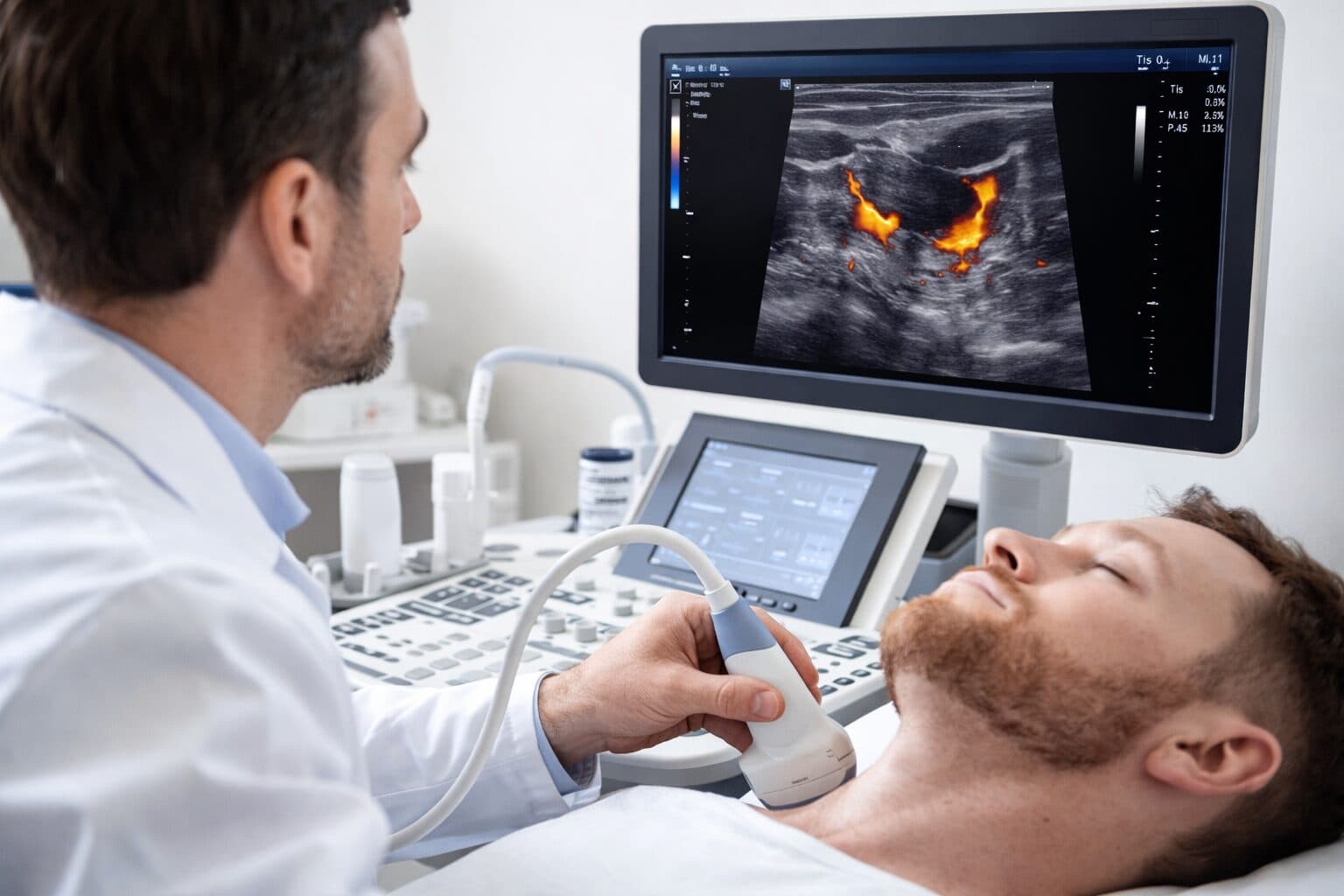
Vitiligo and thyroid diseases share a common thread: autoimmunity. In this article, we explain, in clear language, why they sometimes occur together, what signs to look out for, what tests are typically considered, and when it’s wise to consult a doctor.
Before you read: At Skinpaths, we distinguish between opinion and evidence. To write this content, we prioritized indexed medical sources and recommendations from scientific societies. You’ll find the complete bibliography at the end for your reference.
Important: This article is for informational purposes only and does not replace medical advice. If you have any questions, persistent symptoms, or your condition worsens, always consult a healthcare professional.
Summary in 60 seconds
- Vitiligo is a condition in which areas of skin lack pigment due to the loss of melanocytes. In many people, the immune system plays a role in this process.
- The thyroid can also be affected by autoimmune diseases (such as Hashimoto’s thyroiditis or Graves’ disease).
- The relationship between vitiligo and thyroid is not usually one of «cause and effect», but rather of shared predisposition : those who have vitiligo are, on average, more likely to have thyroid antibodies or some thyroid dysfunction than the population without vitiligo.
- Therefore, several clinical consensus statements consider it reasonable to assess the thyroid (according to age, symptoms and context), and some guidelines propose more systematic screening.
Thyroid disease does not «cause» vitiligo (nor vice versa): their relationship is one of coexistence ; a shared autoimmune predisposition
What are these diseases?
Vitiligo : an acquired loss of pigment that produces well-defined white patches. It is usually chronic, with periods of stability and, sometimes, progression.
Autoimmune thyroid disease : the immune system attacks the thyroid gland (Hashimoto’s, with a tendency towards hypothyroidism) or stimulates it (Graves’, with a tendency towards hyperthyroidism). Both can be mild or subclinical at first.
Why does this relationship appear?
The most widely accepted explanation is shared autoimmunity : certain individuals have a greater genetic and immunological predisposition to produce autoimmune responses, which can manifest in the skin (vitiligo) and in the thyroid (Hashimoto’s/Graves’ disease). This does not mean that vitiligo «damages» the thyroid, but rather that both conditions can occur together through common mechanisms. Baldini 2017
In pooled studies (meta-analyses), people with vitiligo show more antithyroid antibodies and more autoimmune thyroid disease than controls; the relative risk varies according to age, type of vitiligo (segmental vs. non-segmental), and population studied. Fan 2018 Vrijman 2012
What does it look like and what symptoms does it cause?
Vitiligo
- White spots (depigmentation) on face, hands, armpits, groin, around orifices or in any area.
- Sometimes it affects hair (localized graying).
- It usually does not hurt or itch, although some people report mild sensitivity or itching.
Signs of thyroid disease that should be recognized
- Hypothyroidism (Hashimoto’s or other causes): marked tiredness, cold intolerance, constipation, dry skin, hair loss, unexplained weight gain, drowsiness, heavier or irregular periods.
- Hyperthyroidism (Graves or other causes): palpitations, tremor, anxiety, sweating, heat intolerance, weight loss with increased appetite, diarrhea, insomnia.
- Goiter or nodule: lump in the neck, feeling of pressure, changes in voice.
Having vitiligo does not mean you will develop these symptoms, but it does justify being attentive and discussing them with your doctor if they appear.
What can you do? (safe and concrete measures)
-
Do a «context check» : Do you have a family history of thyroid or autoimmune diseases? Are you experiencing compatible symptoms?
-
Discuss it during your consultation (general practitioner, dermatologist, or endocrinologist). Depending on your case, the professionals may suggest the following:
-
- TSH (initial key test).
- Sometimes T4 free .
- In some contexts, antithyroid antibodies (anti-TPO and anti-thyroglobulin) are used, particularly if autoimmunity is suspected or for risk stratification. British Association of Dermatologists 2022
-
Quality sun protection : the contrast between normal skin and dark spots often increases with tanning; in addition, depigmented skin burns more easily.
-
Manage expectations : treating the thyroid is important for your overall health, but it doesn’t always change the course of vitiligo (they can coexist and behave independently).
-
If the emotional impact is high , consider psychological support or dermatological camouflage strategies: it’s part of responsible management.
When is it advisable to consult a doctor?
Consult with priority if any of these points appear:
- Intense palpitations, chest pain, shortness of breath, fainting.
- Unexplained rapid weight loss, marked tremors, or debilitating anxiety.
- Persistent extreme tiredness, marked intolerance to cold, excessive sleepiness, or progressive swelling.
- Lump in neck, difficulty swallowing, persistent voice changes.
- Pregnancy or postpartum with thyroid symptoms.
- Rapidly progressing vitiligo, significant psychological impact, or diagnostic uncertainty.
Frequently Asked Questions
Does vitiligo cause thyroid disease?
- It is not considered a direct cause-and-effect relationship. It is better understood as an association through shared autoimmunity . Baldini 2017
How common is it to have both problems?
- It depends on the population and the study method. Systematic reviews have estimated average prevalences of thyroid disease in vitiligo at around 15% (and autoimmune ~14%), with thyroid antibodies present in a higher proportion. These are averages and do not predict your individual case. Vrijman 2012
What tests should they ask me for?
- Testing often begins with TSH ; depending on the result and clinical presentation, free T4 may be added. In some cases, anti-TPO and anti-Tg antibodies are requested. The exact indication depends on age, symptoms, and medical history. British Association of Dermatologists 2022 NHS Scotland 2023
If I treat my thyroid, will the vitiligo stop?
- Not necessarily. Treating thyroid dysfunction is essential for health, but vitiligo can run its own course. The sensible approach is to manage both conditions in a coordinated manner.
Should I get my thyroid checked even if I don’t have any symptoms?
- There are nuances here. Some guidelines suggest routine screening for vitiligo (especially due to increased antibodies and thyroid disease), while others favor risk-directed screening (age, history, symptoms). In practice, it’s decided on a case-by-case basis. Fan 2018 British Association of Dermatologists 2022
Does this happen in children too?
- This can happen. In children, vitiligo (especially non-segmental vitiligo) has been described as preceding thyroid disorders, so the pediatrician/dermatologist may assess whether thyroid testing is appropriate based on the child’s age and the overall context. British Association of Dermatologists 2022
Are there any diets or supplements «for the thyroid and vitiligo»?
- There is no single, guaranteed dietary intervention. Be wary of absolute promises. If you consider supplements (for example, iodine, selenium, or others), it is wise to do so under clinical supervision, especially if thyroid problems are suspected.
Bibliography and sources
- Fan KC, Yang TH, Huang YC. Vitiligo and thyroid disease: a systematic review and meta-analysis . Eur J Dermatol. 2018;28(6):750-763. doi:10.1684/ejd.2018.3449.
- Vrijman C, Kroon MW, Limpens J, Leeflang MMG, Luiten RM, van der Veen JPW, et al. The prevalence of thyroid disease in patients with vitiligo: a systematic review . Br J Dermatol. 2012;167(6):1224-1235. doi:10.1111/j.1365-2133.2012.11198.x.
- Baldini E, Odorisio T, Sorrenti S, Catania A, Tartaglia F, Carbotta G, et al. Vitiligo and autoimmune thyroid disorders . Front Endocrinol (Lausanne). 2017;8:290. doi:10.3389/fendo.2017.00290.
- Chivu AM, Bălășescu E, Pandia LD, Nedelcu RI, Brînzea A, Turcu G, et al. Vitiligo–thyroid disease association: when, in whom, and why should it be suspected? A systematic review . J Pers Med. 2022;12(12):2048. doi:10.3390/jpm12122048.
- Eleftheriadou V, Atkar R, Batchelor J, McDonald B, Novakovic L, Patel JV, et al. British Association of Dermatologists guidelines for the management of people with vitiligo 2021 . Br J Dermatol. 2022;186(1):18-29. doi:10.1111/bjd.20596.
- American Academy of Dermatology Association. Vitiligo: diagnosis and treatment [Internet] . Rosemont (IL): American Academy of Dermatology Association; 2026 [consultado 6 jun 2026] . Available from: American Academy of Dermatology Association .
- Center for Sustainable Delivery; Scottish Dermatological Society. Vitiligo [Internet] . Scotland: Right Decisions; 2023 [consultado 6 jun 2026] . Available from: Right Decisions, NHS Scotland .
Categories: Featured · For everyone

Content reviewed by
Dr. Rodolfo Suárez
Médico Patólogo y Dermatólogo Master en Patología Cutánea Avanzada
- Published
- September 18, 2026
- Updated
- September 23, 2026
Medically reviewed by specialists
Our content is based on current scientific evidence and clinical protocols.